
August 6, 2026
Why your company needs one connected system: not ten disconnected systems
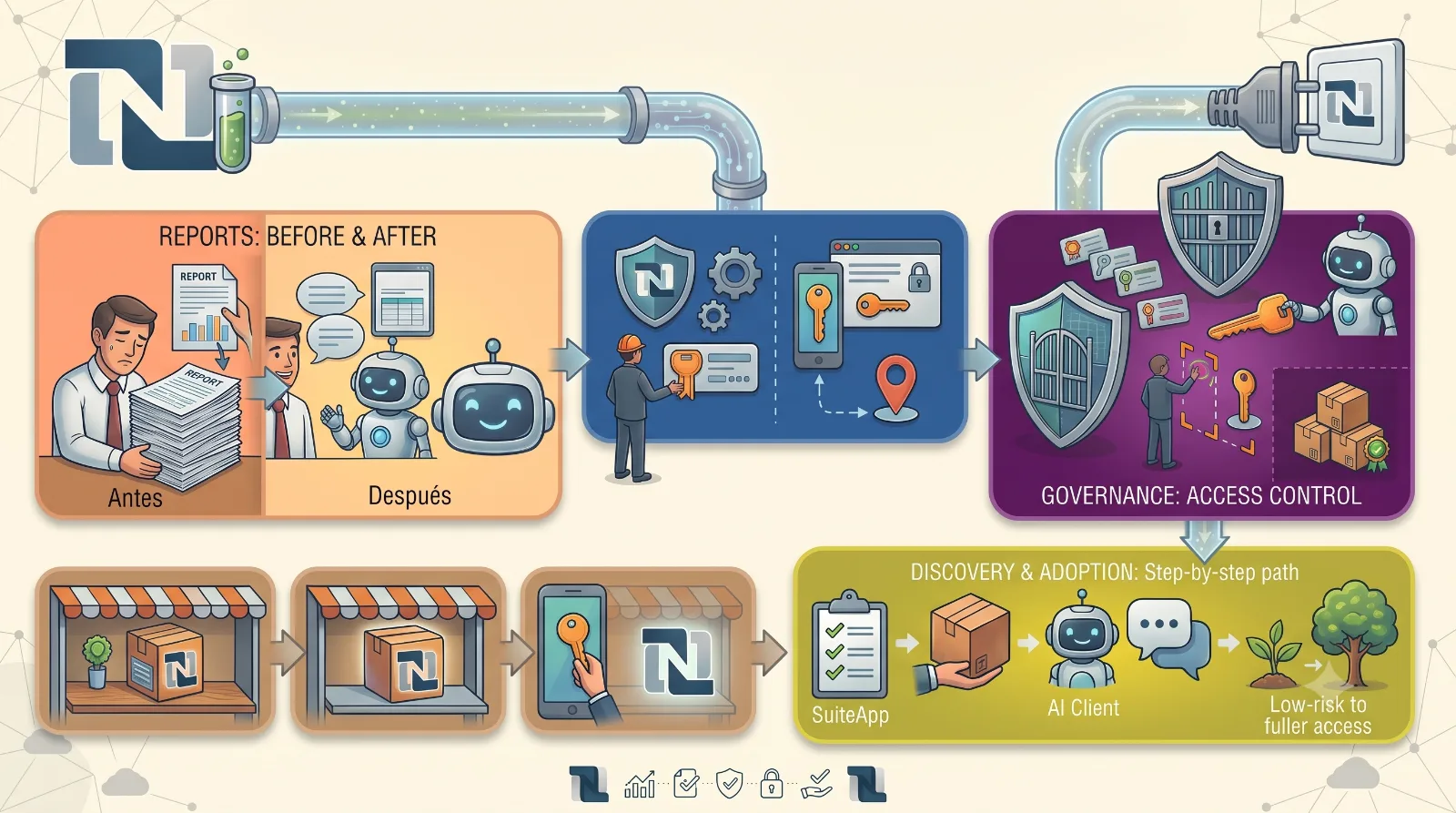
This is where the idea of a truly connected business—one in which your ERP, your online store, and your logistics tools automatically communicate with each other—ceases to be a "desirable feature" and becomes the backbone of your operations.
The hidden cost of manual data entry
Most companies don't realize how much manual data entry costs them until they measure it. Every order that needs to be re-entered from an online store into an accounting system involves:
- An opportunity for a typographical error (incorrect SKU, incorrect quantity, incorrect address)
- A delay between the time a customer places an order and the time your team can act on it.
- The time your staff could be spending with customers, not copying and pasting.
If we multiply that by hundreds or thousands of orders per month, manual data entry is not only inefficient, but it actively limits the growth of your business without the need to increase staff.
Why ERP is the foundation
An ERP (Enterprise Resource Planning) system like NetSuite or SAP exists precisely to solve this problem. Instead of finance, inventory, and order management operating in isolation, everything is centralized in a single source of information. Inventory counts are updated in real time. Financial statements are finalized faster because the data is already accurate. And management gains a real-time view of the business, rather than a snapshot that is already outdated by the time the report is prepared.
The main advantage is not just "having an ERP", but having a system flexible enough to grow with you, whether by adding new sales channels, new warehouses or new business units.
E-commerce cannot live in isolation.
On the other hand, your e-commerce platform—whether it's Shopify , BigCommerce , or another—is where the customer relationship is built. But an online store that isn't connected to your internal management system poses a risk. Someone has to manually reconcile orders, manually update inventory levels, and manually ensure that the correct product is shipped to the correct customer.
When your e-commerce platform is integrated with your ERP system, orders flow automatically, inventory is synchronized both ways, and your team can trust that what the website indicates is in stock, actually is.
Satisfaction is the final stretch that matters most.
Even seamless ERP and e-commerce integration is insufficient if order management remains a manual process. Tools like ShipStation solve this problem by connecting directly to the order data already flowing between your online store and your ERP, automating label creation, carrier selection, and tracking updates without the need for spreadsheets.
The result is a seamless end-to-end workflow: a customer places an order, the inventory is updated, the warehouse is notified, a label is printed, and financial data is recorded—all without the need for manual data entry.
Building a "connected company" culture
This is not just a technological decision, but also a cultural one. Companies that consider integration a fundamental infrastructure, rather than something secondary, tend to:
- Make decisions faster, because the data is reliable and up-to-date.
- Increase order volume without increasing manual labor at the same rate.
- Reduce the risk of "tribal knowledge," where a single person is the only one who understands how systems connect.
- Free up staff to focus on strategy, customer experience, and growth instead of data reconciliation.
The companies that get the most value from platforms like NetSuite, SAP, Shopify, BigCommerce, and ShipStation aren't necessarily the ones with the most sophisticated technology, but rather the ones that are committed to keeping everything connected as a standard part of their operations, and not as a project they complete once and then forget about.
In summary
Manual processes can work when a company is small. But as order volume increases, so does the cost of each offline system, each re-entered order, and each "let me check it and I'll get back to you." Investing in an integrated ERP and e-commerce ecosystem isn't just an IT upgrade; it's a critical business decision that translates into speed, accuracy, and the ability to scale without creating chaos.
Do you want to design an integrated ERP and e-commerce system for your business? A quick audit of your current systems is often the fastest way to discover where manual work is silently slowing you down.